3 ways to incline your bed (and which one fits your life)
Option 1: A wedge pillow on top of the mattress (cheapest, fastest)
Best if: you need a quick, low-cost start tonight.
What it feels like: you sleep “on” the wedge. For some people it helps, especially if the wedge is firm and supports your torso (not just your head).
The common problems (why many people move on):
-
Comfort: it can feel like you’re propped up instead of sleeping naturally.
-
Sliding: many people slowly slide down during the night and wake up readjusting (common real-world complaint – verify with your own experience).
-
Fit: if it’s too short or too soft, you end up bending at the waist or just lifting your head, which is not the goal. Mayo Clinic notes that raising your head with extra pillows is not effective.
If you want a quick side-by-side of why many people upgrade from a wedge pillow to an under-mattress solution, see this comparison: Reflux Guard comparison page.
Option 2: Reflux Guard (full-width wedge under the mattress)
Best if: you want a stable incline that feels natural and is easy to stick with long-term.
What it feels like: the mattress sits on a gentle slope, so your upper body is elevated without “perching” on a pillow wedge.
Why people usually prefer this over the cheap wedge:
-
More stable – nothing to slip out from under you.
-
Full-width support – both shoulders stay level, and it’s often easier for couples.
-
Set it and forget it – you are not rebuilding your setup nightly.
This matches what major medical guidance is aiming for: elevating your body so gravity can help, not just piling pillows.
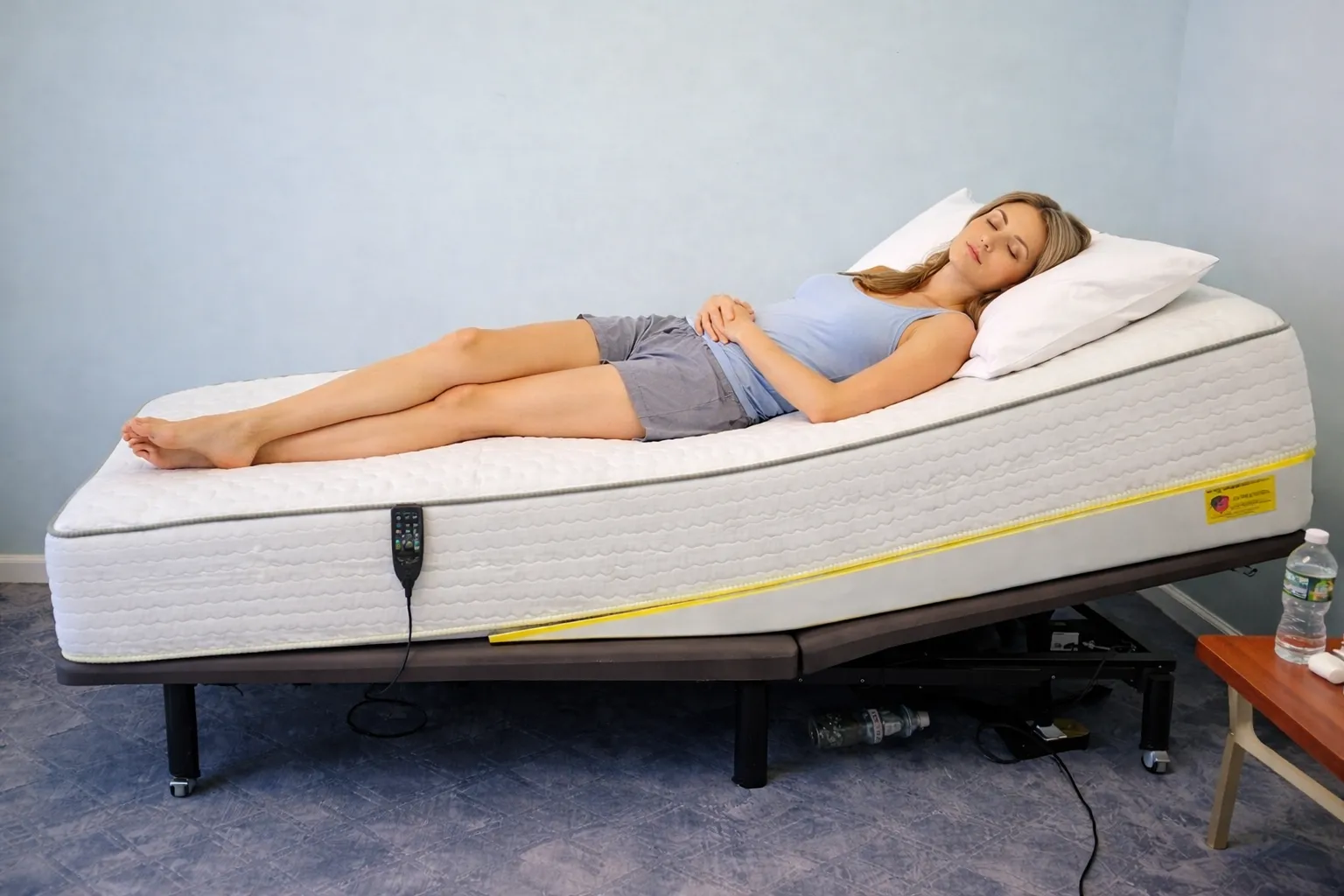
Option 3: Best of both worlds – Reflux Guard + an electric adjustable bed
Best if: you already have an adjustable base (or you’re considering one) and you want maximum comfort and flexibility.
How the combo works (simple):
-
Use Reflux Guard as your baseline gentle incline, full-width, stable.
-
Then use your adjustable bed to add a small extra boost on tougher nights (late meal, more symptoms), instead of cranking the bed up high.
Why this combo can feel better than an adjustable bed alone:
-
You often need less bend at the waist because your body is already on a gradual slope.
-
You can keep the adjustable setting lower, which many people find more comfortable.
-
Sleep Foundation notes that elevating the top of the bed by at least about 6 inches can reduce reflux symptoms, and an adjustable bed frame is one way to do that.