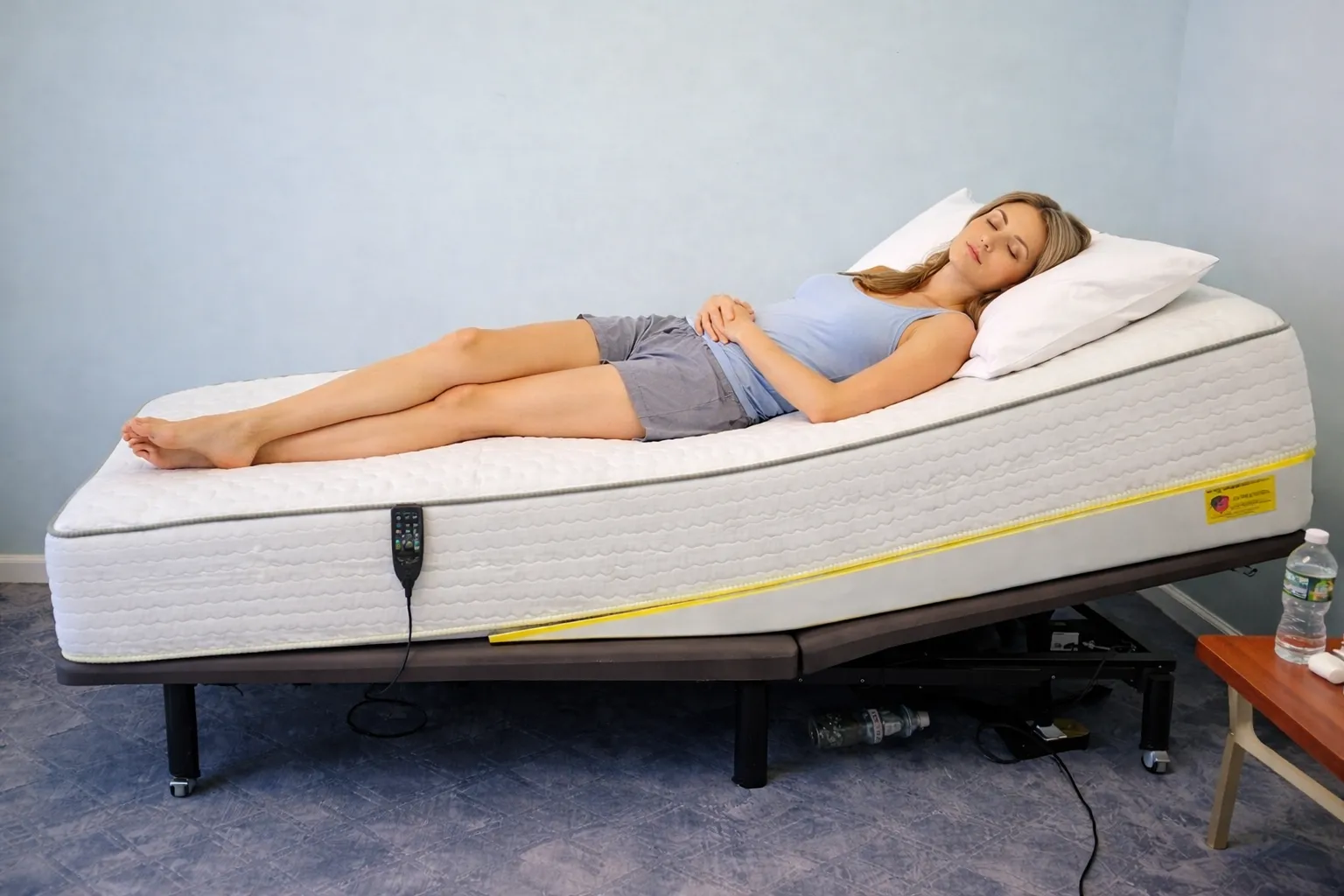

Most people hear “raise the head of the bed 6 to 9 inches,” but what your body actually responds to is the incline angle and how your torso is supported. The goal is a setup that gives real relief and real sleep, not just a number. For couples, it becomes an “intersection sweet spot”: the incline that helps the person with GERD while still letting their partner sleep comfortably. When reflux or another condition is serious, the best setup is usually two separate sleep surfaces, such as a split king, so each person can pick their own sweet spot. If that’s not possible, a lower shared incline is often the practical move, and even a lower incline can still help compared to flat.
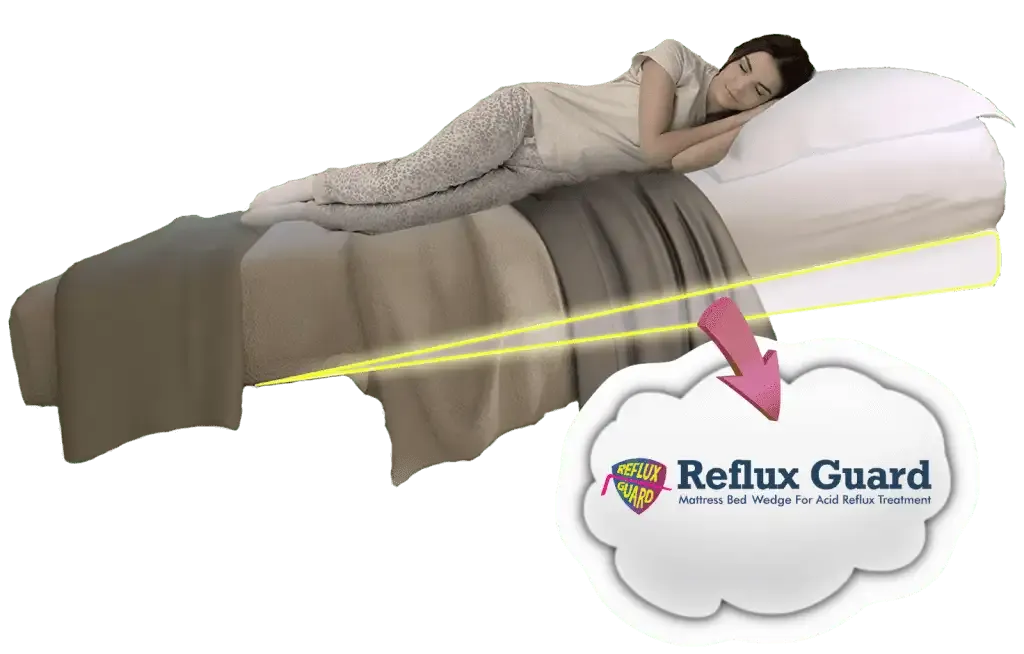
Major medical sources commonly recommend raising the head end of the bed, and they also note that extra pillows are not effective because they don’t reliably elevate the body from the waist up.
That advice is popular because inches are easy to measure. But inches are really a shortcut for what matters most:
Same inches, different angle. Same inches, totally different comfort. If you want a simple way to think about the “inches” debate, this breakdown of 4 inches vs 6 inches of elevation is a useful reference point, but the real target is still the angle and support.
If the incline is “technically right” but you cannot stay there all night, it won’t help much.
The right incline is the one where:
That’s why a proper setup matters just as much as the “amount” of elevation. A good mental model is focusing on sleeping on an incline as a full torso position, not a pillow trick.
A lot of people assume the answer is simply “more incline.” In reality, it’s usually a sweet spot between effectiveness and comfort.
Two useful guardrails:
There is evidence that head-of-bed elevation can improve GERD symptoms and esophageal acid exposure for many people, but “how much” varies by person and setup.
When one person needs incline and the other does not, the question becomes: What incline can the reflux sleeper benefit from, while the partner can still sleep comfortably?
In real life, the overlap sweet spot is often a lower incline than the reflux sleeper would choose alone, simply because comfort has to work for two people.
For couples, consistency beats perfection. A lower incline you can keep every night often wins over a steeper incline that gets abandoned after three nights.
Even if your partner does not think they need incline, some people notice side benefits such as:
Important note: these are “may help” benefits and vary a lot person to person. But they can make it easier for a partner to feel like incline is not just a sacrifice.
If someone is dealing with significant GERD or other serious issues, the cleanest solution is usually separate sleep surfaces (for example, split king / two mattresses). That way:
One extra tweak that can stack with incline for some people is side choice. If you want a quick refresher, this guide on what side to sleep on with acid reflux pairs nicely with the “sweet spot” idea.
Please share this if you think it could help someone you care about.