
If you suffer from acid reflux or GERD (Gastroesophageal Reflux Disease), you’re likely all too familiar with the burning sensation in your chest, the coughing at night, or the feeling of food creeping back up your throat. It’s not only uncomfortable—it can rob you of a good night’s sleep, impact your daily productivity, and even lead to more serious health complications over time.
But what if a simple change in how you sleep could make a major difference?
One of the most overlooked, yet powerful solutions for nighttime reflux is elevating your head while you sleep—specifically, sleeping on an incline.

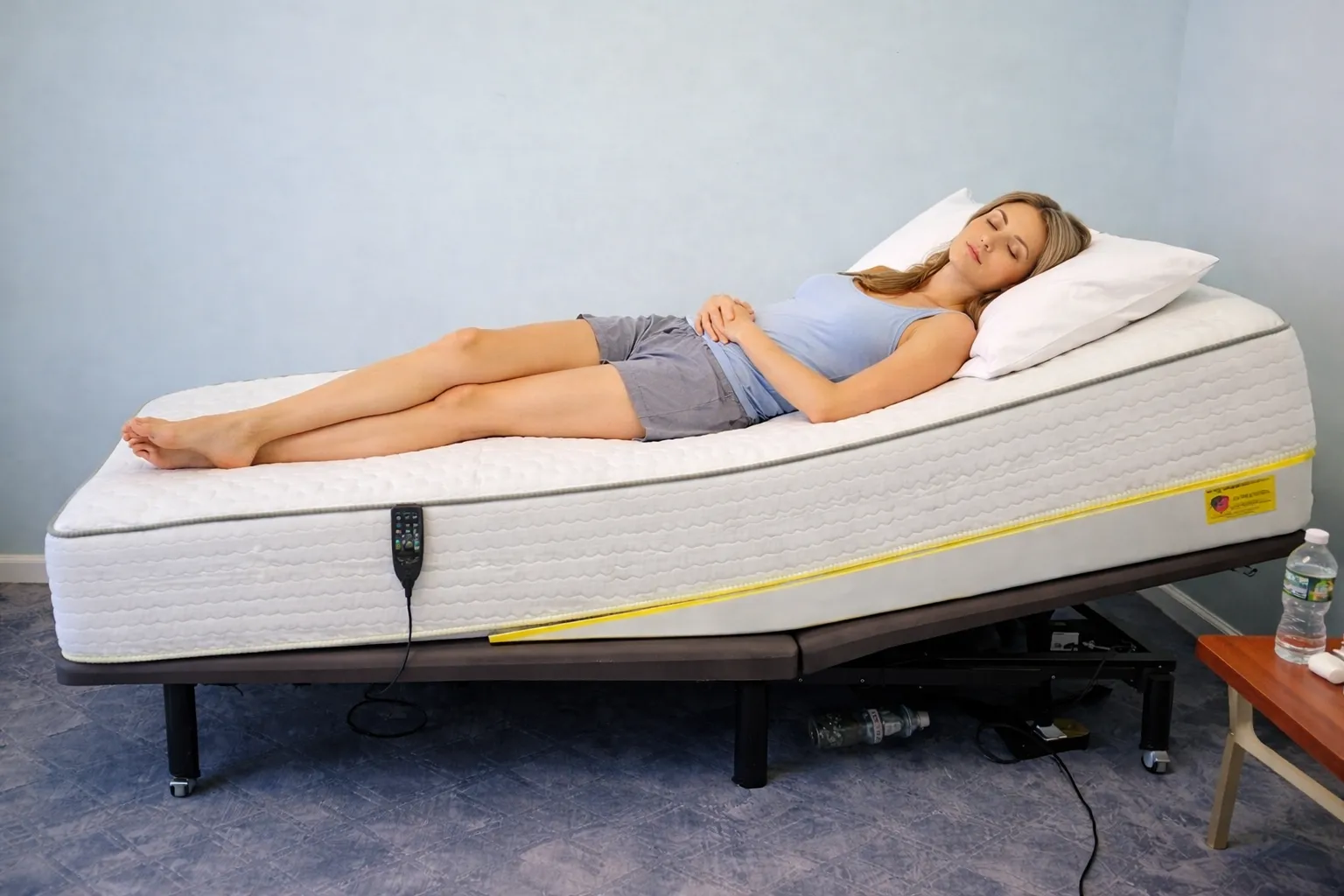
Sleeping on an incline means your upper body is elevated at a gentle angle—typically 6 to 8 inches from the top of the mattress to the headboard. It’s not about stacking pillows, which can bend your body awkwardly and create new problems. Instead, it’s about raising the entire upper torso, from your waist up, so gravity can do its job naturally throughout the night.
When you lie flat, gravity isn’t working in your favor. Your stomach and esophagus are on the same level, making it easier for stomach acid to travel upward. That’s exactly what causes nighttime reflux and all the symptoms that come with it: burning, choking, coughing, and restlessness.
By elevating your upper body, gravity helps keep acid in the stomach where it belongs. It’s a non-invasive, drug-free approach that works with your body’s natural processes rather than against them.
A 2020 clinical study found that using a under mattress wedge to elevate the head of the bed by 18 or 28 centimeters significantly reduced the frequency of nighttime GERD symptoms such as heartburn, regurgitation, coughing, and insomnia compared to lying on a flat mattress. While both wedge heights were effective in decreasing symptoms when patients were lying down, the 18 cm wedge was better tolerated in terms of comfort. The researchers concluded that mattress wedges are a valuable non-pharmacological option for managing GERD symptoms during sleep, offering relief for many who struggle with nighttime reflux.
Clinical studies have shown that head-of-bed elevation significantly reduces nighttime reflux episodes. The American College of Gastroenterology recommends head elevation as part of lifestyle modifications for people with GERD. Many doctors advise their patients to sleep on an incline before even considering medications or surgeries.
| Study/Source | Intervention | Main Positive Outcome | Notes on Comfort/Adverse Events |
|---|---|---|---|
| 2020 Mattress Wedge Study | 18 cm and 28 cm wedges | Significant reduction in GERD symptoms in supine position | 28 cm wedge less comfortable |
| Hamilton 1988 RCT | Sleeping on wedge | Reduced acid exposure compared to control | Majority preferred head-of-bed elevation |
| Harvey 1987 RCT | Head-of-bed elevation | 71.9% reported overall improvement in symptoms | Few minor adverse events |
| RACGP Review | 20 cm wedge/block | Weak but positive evidence for symptom improvement | – |
If you’ve ever tried piling up pillows to elevate yourself, you know it’s not ideal. Pillows shift, compress, and put your neck and back at awkward angles. This often leads to more tossing and turning—and little to no relief from reflux.
This is where products like Reflux Guard come into play. Reflux Guard is a mattress underlay that gently lifts the head of your bed without compromising comfort. It stays in place, supports your entire upper body, and works with virtually any mattress. Thousands of people have used it as a reliable and permanent solution to nighttime reflux.
If you’re tired of sleepless nights, burning pain, and the constant worry of acid creeping up while you rest, it’s time to consider sleeping on an incline. It’s simple. It’s natural. And for many, it’s a total game-changer.
You don’t have to suffer in silence or rely solely on medications. Elevate your sleep—literally—and take a big step toward better nights and healthier days.
Would you like help turning this into a graphic or video script for social media?
Yes, it does. When your head is raised a bit higher than your stomach, it helps keep stomach acid from coming up into your throat. That makes sleep more comfortable.
It sure does. Lying flat can make reflux worse. A slight incline helps your body keep the acid where it belongs—in your stomach.
Most doctors say about 6 to 8 inches of incline is best. You don’t need to sit straight up—just enough to let gravity do its job.
Yes, elevation makes a difference. A raised upper body can stop acid from moving up, which means less heartburn and better sleep.