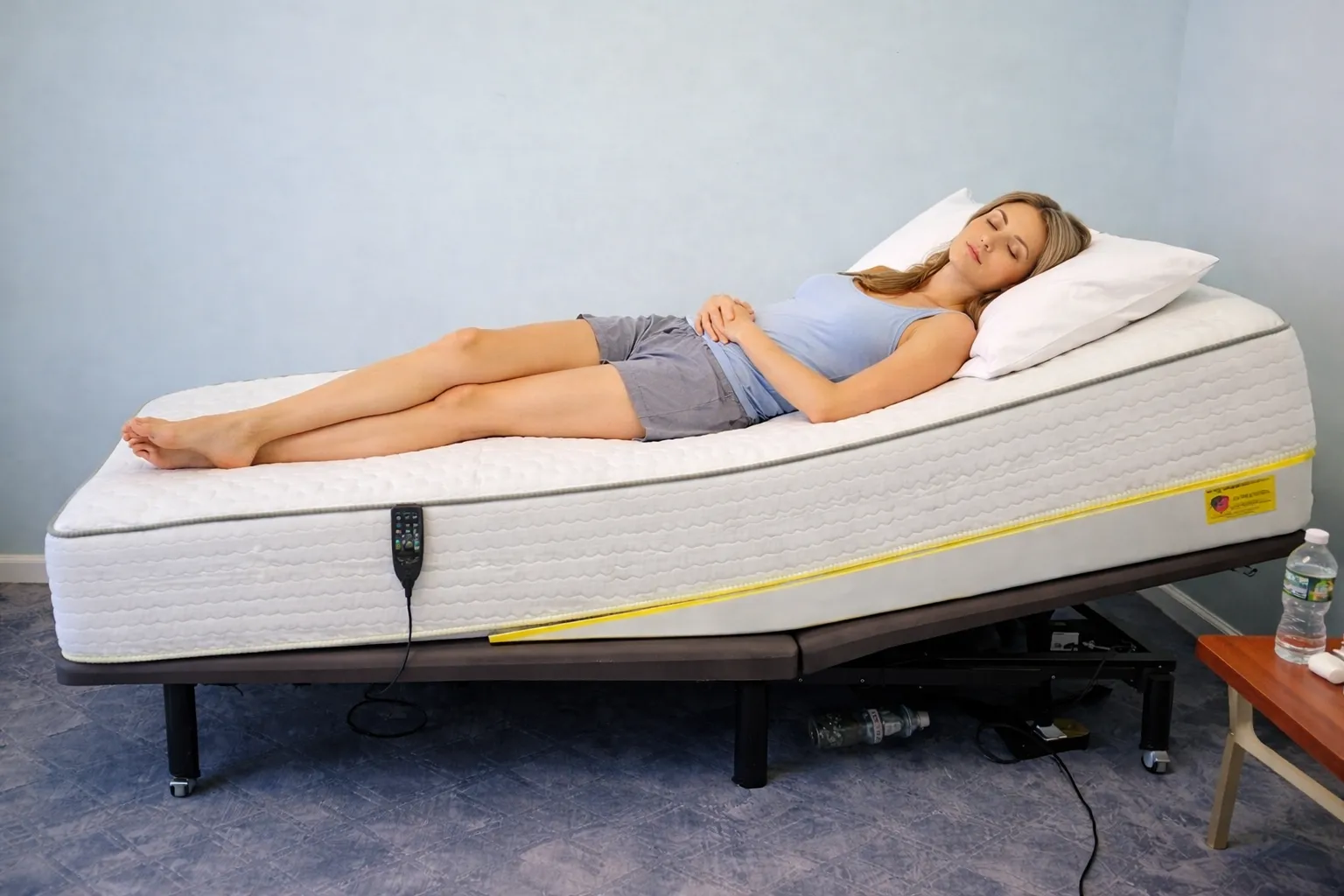
TL;DR: Electric adjustable beds are extremely helpful for positioning and mobility, but when they bend sharply at the waist, they can concentrate pressure in vulnerable areas of the body. That pressure may increase the risk of bed sores (pressure ulcers). A gradual, full-width under-mattress incline can distribute body weight more evenly, support multiple sleep positions, and may reduce pressure points that contribute to skin breakdown.
Bed Sores and Electric Beds: A Hidden Pressure Problem
Electric adjustable beds have become a standard tool in hospitals, nursing homes, and private homes. They make it easier to raise someone for eating, repositioning, or transferring in and out of bed. But there is an important downside that often goes unaddressed: most electric beds create a bend at the waist, not a gradual incline of the entire body.
If you already use elevation for comfort or reflux relief, it is worth thinking about the difference between a gentle incline and a sharp bend, because the geometry of support can change how pressure loads onto the body.
Why Pressure Distribution Matters
Bed sores, also called pressure ulcers, form when constant pressure restricts blood flow to the skin and underlying tissue. Over time, reduced circulation can damage tissue and may lead to open wounds.
High-risk areas include
- Tailbone (sacrum)
- Hips
- Heels
- Lower back
- Shoulder blades
When a bed bends at the waist, body weight is no longer spread smoothly from head to toe. Instead, pressure tends to concentrate around the bend point and lower extremities. Even if a mattress is high quality, the shape of the bed frame itself can create unnatural pressure zones.
Electric Beds vs. Gradual Incline
A waist-bend position can
- Force the body into a seated hinge shape
- Increase pressure at the pelvis and sacrum
- Often restrict sleepers to lying on their back
A gradual incline created underneath the mattress can
- Support the body from head to lower legs
- Create a smooth slope rather than a sharp angle
- Help distribute weight across a larger surface area
- Allow side sleeping and easier position changes
If you want a practical overview of how a full-body incline differs from other setups, this comparison of under-mattress wedges versus other solutions breaks down why a gradual slope can feel more stable across the night.
How a Gradual Incline May Help With Bed Sores
While more research is always welcome, the mechanical logic is straightforward:
- Less concentrated pressure on one small area
- More even weight distribution
- Fewer extreme pressure points
- Potentially less tissue stress over time
If pressure is one of the primary drivers of skin breakdown, reducing peak pressure zones may reduce risk. This does not replace standard prevention measures such as turning schedules, skin checks, nutrition, hydration, and moisture management, but it may support them.
Sleep Quality and Skin Health Are Connected
Poor sleep can weaken healing. Discomfort can lead to restlessness, shallow sleep, and frequent awakenings. A more comfortable sleeping surface can promote deeper sleep, reduce tossing and friction, and support more natural movement during the night.
If you are trying to elevate but keep comfort high, it helps to understand why an under-mattress wedge can feel different than a wedge pillow, especially for people who struggle to stay positioned.
A Practical Two-Part Approach
Many care environments can benefit from using:
- Electric beds for mobility, transfers, and upright positioning
- A gradual under-mattress incline for long-duration sleep
This combination allows caregivers to raise and lower the bed as needed, while residents sleep on a surface that promotes more even pressure distribution. For the basics of setting up elevation correctly, this guide on how to incline the head of the bed the right way is a useful reference for common heights and positioning goals.
Did You Know?
- Did You Know (1): Pressure ulcers can develop within a few hours when blood flow is restricted.
- Did You Know (2): The shape of a sleeping surface can influence pressure distribution as much as mattress firmness.
- Did You Know (3): Improving comfort can indirectly reduce risk by decreasing friction, shear, and restlessness.
Final Thought
Electric beds solve many problems, but they can also introduce new mechanical stresses. Looking beyond the mattress and examining how the body is supported geometrically opens the door to better solutions.
External Source
For a reputable clinical overview of pressure ulcers, see the NIH NCBI Bookshelf resource: Pressure Ulcers: A Patient Safety Issue (NIH NCBI Bookshelf)