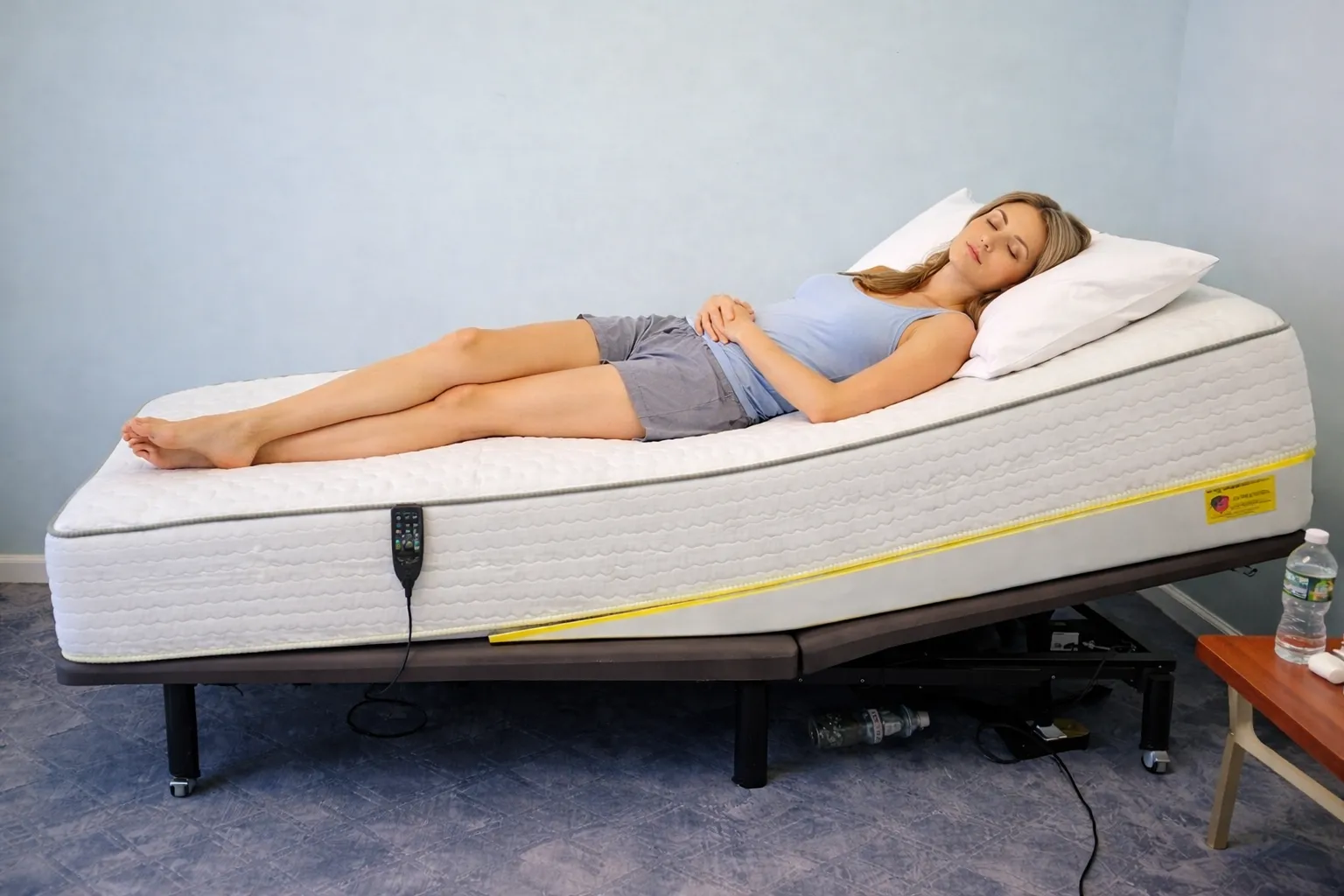

Silent reflux, also called laryngopharyngeal reflux, occurs when stomach acid travels up the esophagus and reaches the throat without the typical symptom of heartburn. Because the acid can irritate the voice box and airways, it can cause chronic cough, throat clearing, or hoarseness. A mattress wedge such as Reflux Guard raises the head and upper body to help reduce the backflow of stomach acid during sleep.
Silent reflux differs from gastroesophageal reflux disease (GERD) in that many people do not feel burning in the chest. Instead, the acid reaches higher areas, such as the throat and nasal passages. This can make it harder to diagnose because the symptoms may resemble allergies or respiratory issues.
In both silent reflux and GERD, acid moves upward when the valve between the stomach and esophagus does not close fully. Sleeping flat can make it easier for acid to travel toward the throat.
Gravity plays a role in keeping stomach acid where it belongs. When the head and upper body are inclined, the angle can help prevent acid from moving up into the throat. Medical research has shown that bed elevation can reduce the frequency and severity of reflux episodes.
For silent reflux, the goal is to reduce the exposure of the esophagus and throat to stomach acid during sleep. A mattress wedge creates a consistent incline through the night, unlike regular pillows that can shift or compress.
Stacking regular pillows to create height is common, but it does not provide a steady slope. The neck may bend at an angle, which can cause discomfort and may not prevent acid flow. A mattress wedge supports the entire upper body, from the head to the lower back, keeping the incline even.
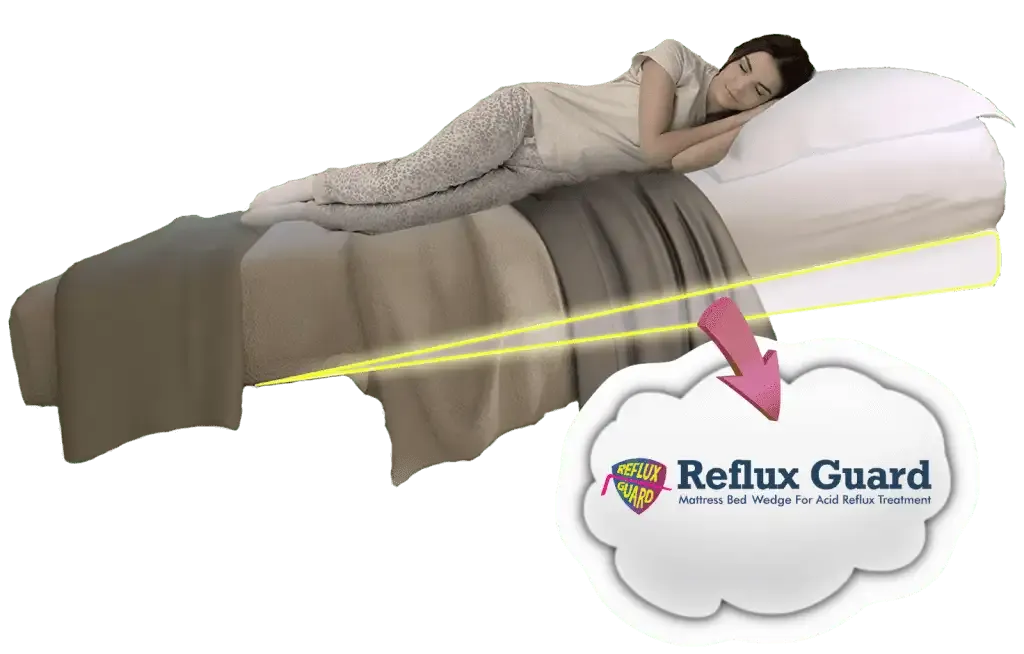
Reflux Guard is an under-mattress wedge system. This means it lifts the head of the bed from underneath, creating a smooth slope for the whole body to rest on. This design can be more stable and comfortable for sleepers who move during the night.
Reflux Guard is placed under the mattress to raise the head of the bed by either 4 inches or 6 inches. The 4-inch height creates a gentler incline, while the 6-inch height offers a steeper slope that can reduce acid flow more effectively for some people.
Years of customer feedback have shown differences in comfort and tolerance between the two sizes. Past return data revealed that only about 2 percent of orders were refunded, with most refunds from the 6-inch version. Many people found the 4-inch height easier to adjust to, while others preferred the stronger effect of the 6-inch wedge.
When customers report discomfort or other issues, direct communication helps identify adjustments. This may include trying a different height, repositioning the wedge, or making small changes to bedding. Ideas gathered from customers have been added to the troubleshooting process to help more people find a workable solution.
The right incline depends on comfort, health condition, and how the body responds. A steeper incline can help prevent acid reflux more effectively for some, but not everyone can tolerate it. Too much elevation may cause sliding or strain in the lower back.
| Wedge height | Incline effect | Notes |
|---|---|---|
| 4 inches | Gentle slope | Easier to adjust to, fewer returns reported |
| 6 inches | Steeper slope | May be more effective but harder for some to tolerate |
Finding the right balance between comfort and effectiveness is important for long-term use.
When selecting a mattress wedge, consider:
Height and incline
Whether it is under-mattress or on-top
Material durability
Adjustability
Under-mattress wedges such as Reflux Guard keep the mattress surface flat while still elevating the head and shoulders. This can make it easier for side sleepers and back sleepers to rest without feeling a gap under the neck.
Clinical studies have measured the effect of bed elevation on acid exposure in the esophagus. Results often show a reduction in reflux episodes when the head of the bed is raised by at least 6 inches. Bed elevation is sometimes recommended as part of the diagnosis and management plan for reflux, alongside diet and lifestyle changes.
For silent reflux, the reduced contact of stomach acid with the throat tissues can help lower irritation and swelling. The exact incline needed varies by individual, which is why adjustable solutions or multiple height options can be helpful.
Installing Reflux Guard involves lifting one end of the mattress and placing the wedge underneath. The wedge extends across the bed width to provide even support. Because it sits under the mattress, it works with most bedding and does not require a change in pillows.
Adjustments can be made by shifting the wedge slightly forward or back under the mattress to fine-tune the incline. For people who need a temporary change, the wedge can be removed without altering the bed permanently.
While reflux prevention is the primary use, a mattress wedge can also:
Reduce snoring by keeping airways open
Assist recovery after certain surgeries
Support proper spinal alignment for some sleepers
Provide comfort for reading or watching TV in bed
Leg elevation is another use, though it requires placing the wedge at the foot of the bed instead of under the head. This kind of elevation isn’t for sleeping.
Silent reflux can cause throat irritation without heartburn
Elevation of the upper body can help prevent acid from reaching the throat
Reflux Guard offers 4-inch and 6-inch under-mattress wedge options
Customer data shows fewer returns with the 4-inch version
The correct incline depends on comfort and effectiveness for each person
Under-mattress wedges provide stable elevation for the whole upper body